Home / Articles
ICL vs Cataract Surgery: Differences, Age and Suitability
Home / Articles
ICL vs Cataract Surgery: Differences, Age and Suitability
For many adults in cities like Chicago or Houston, waking up to blurry vision has become an accepted part of aging. But when you start researching permanent solutions, you are often met with a confusing fork in the road: should you get ICL vs cataract surgery? This decision represents one of the most significant choices a patient can make for their ocular health and daily quality of life.
The confusion often stems from the fact that both procedures involve placing a lens inside the eye, yet they serve vastly different purposes and age groups. Choosing the wrong path can lead to suboptimal results or the need for secondary procedures later in life. While ICL is an additive technology that leaves your natural lens intact, cataract surgery is a replacement technology that removes a clouded or aging lens.
This comprehensive guide will explore the fundamental mechanical differences between Phakic lenses and lens replacement. We will examine suitability criteria based on the ICL age limit in Korea and the United States. Furthermore, we provide a detailed lens replacement surgery comparison for those experiencing presbyopia. Our goal is to help you determine your candidacy using advanced diagnostics and expert insights.
The term Phakic refers to an eye that still possesses its natural crystalline lens. In the context of ICL vs cataract surgery, the Phakic approach is revolutionary because it is reversible. The lens is placed in the posterior chamber, which is the space behind the iris and in front of the natural lens. This positioning ensures that the lens is invisible to the naked eye and to the patient.
Because the natural lens is preserved, the eye maintains its ability to focus on objects at various distances, a process known as accommodation. This is a critical distinction when debating ICL vs cataract surgery for younger patients. Younger eyes have flexible natural lenses that should be kept as long as they are clear and functional. Removing a healthy lens too early can lead to an immediate loss of near vision.
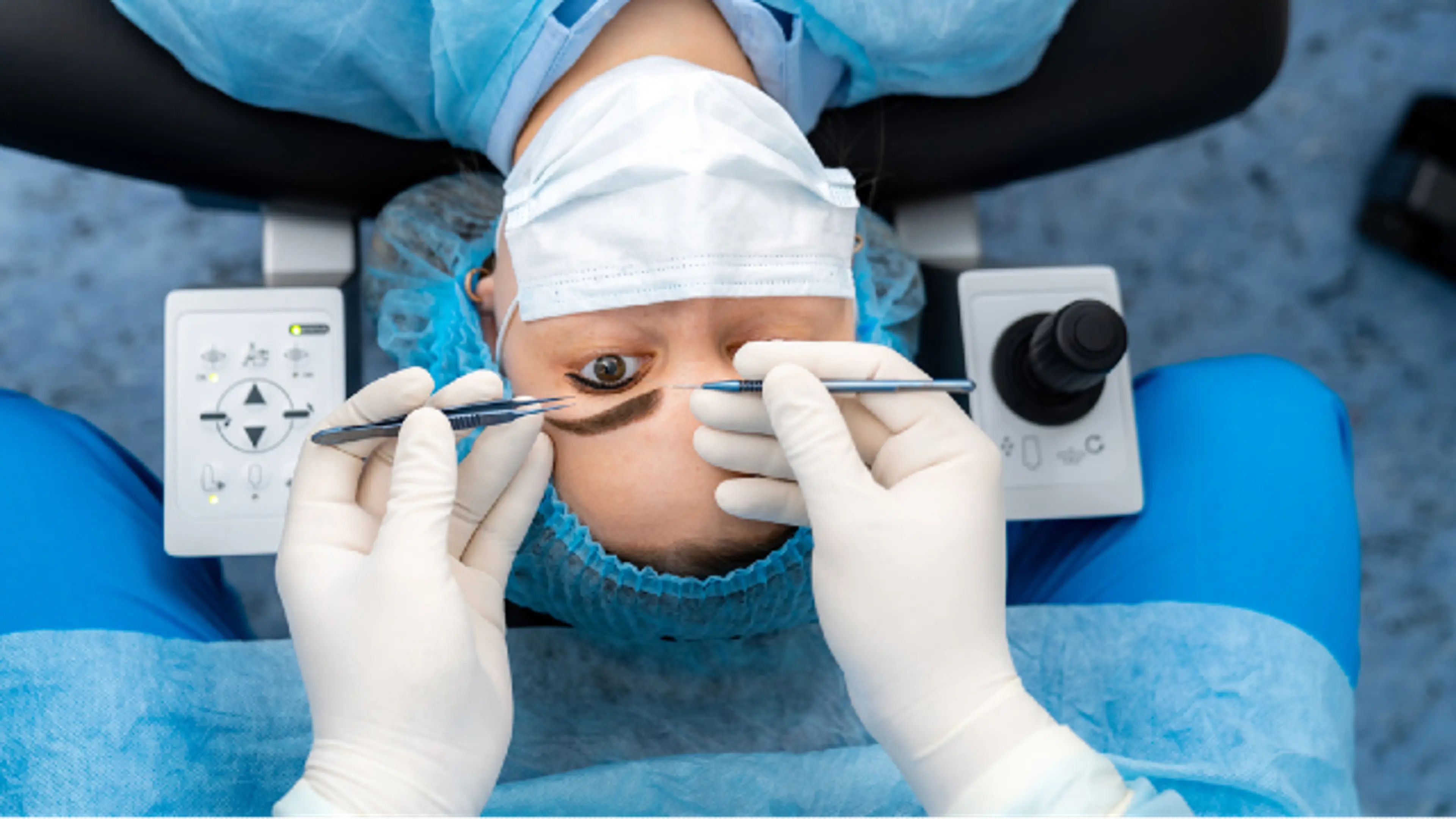
The surgical technique for ICL is minimally invasive. A tiny incision is made at the edge of the cornea. The lens, which is folded into a dedicated injector, is inserted and then unfolds into its proper position. This procedure typically takes less than 15 minutes per eye. Because no tissue is removed, the corneal integrity remains intact, reducing the risk of dry eye symptoms often associated with other refractive surgeries.
EVO ICL represents the latest evolution in Phakic IOL technology. The primary advancement is the CentraFLOW technology, which features a small hole in the center of the lens. This hole allows for the natural flow of aqueous humor, the fluid inside the eye. In older versions of ICL, surgeons had to perform a peripheral iridotomy, which involved using a laser to create a small hole in the iris to prevent pressure buildup.
The Collamer material used in EVO ICL is a proprietary blend of polymer and collagen. It is highly biocompatible, meaning the body does not perceive it as a foreign object. This material also provides UV protection, which is a significant benefit for long term eye health. When comparing ICL vs cataract surgery, the optical quality of Collamer is often cited as superior for high myopia correction because it mimics the natural properties of the human eye.
Visual outcomes with EVO ICL are often described as high definition. Because the lens is placed closer to the nodal point of the eye, it can provide sharper vision than glasses or contact lenses. Patients often report a "wow" factor immediately after surgery, with many achieving 20/15 vision or better. This level of precision is why many international patients seek this specific technology at Gangnam St. Mary’s One Eye Clinic.
Candidacy for ICL is typically determined by age, refractive error, and eye anatomy. Ideal candidates are between the ages of 21 and 45 with stable vision for at least one year. ICL is particularly effective for those with high myopia, ranging from negative 3.0 to negative 20.0 diopters. It also corrects astigmatism up to 6.0 diopters.
One of the most important factors is the anterior chamber depth. There must be enough space inside the eye to safely house the lens without touching the iris or the natural lens. We use university level diagnostic equipment to measure this space down to the micron level. If the space is too shallow, ICL vs cataract surgery might be discussed as an alternative, or the patient might be advised against surgery.
Thin corneas are another reason patients choose ICL. Laser surgeries like LASIK require a certain amount of corneal thickness to safely remove tissue. If a patient has naturally thin corneas or an irregular shape, ICL provides a safe alternative that does not involve the cornea at all. ICL is a masterpiece of additive surgery; we are enhancing your vision without removing any natural tissue, notes Dr. Hyo Won Kim.
Cataract surgery is a corrective procedure that involves the removal of the natural, cloudy lens and replacing it with a synthetic intraocular lens to restore clear vision. It helps patients suffering from cataracts or presbyopia achieve permanent visual clarity and eliminates the need for future cataract procedures.
When we talk about ICL vs cataract surgery, we are moving from additive to replacement logic. In cataract surgery, the natural lens has either become cloudy, which is a cataract, or has lost its ability to focus, which is presbyopia. By replacing the lens, we are not just correcting the prescription; we are removing the source of the vision problem entirely.
There is often confusion between Refractive Lens Exchange and cataract surgery. Technically, they are the same surgical procedure. The difference lies in the state of the natural lens. If the lens is clear but we replace it to correct a high prescription or presbyopia, it is called Refractive Lens Exchange. If the lens is already cloudy, it is called cataract surgery.
In the debate of ICL vs cataract surgery, lens replacement is usually reserved for patients over the age of 50. At this stage of life, the natural lens is already beginning to harden and lose its clarity. Replacing it early can prevent the development of cataracts later in life. For a patient in their 50s or 60s, ICL vs cataract surgery is often decided in favor of replacement because it provides a more permanent, one time solution.
The procedure involves using ultrasound energy or a femtosecond laser to break up the natural lens. The pieces are then gently suctioned out through a micro incision. A new, clear intraocular lens is then inserted into the same "capsular bag" that held the natural lens. This ensures the new lens stays in a stable, central position for the rest of the patient's life.
Choosing the right intraocular lens is the most critical part of the lens replacement process. There are three main categories: monofocal, multifocal, and trifocal lenses. Monofocal lenses provide clear vision at one distance, usually far away. Patients with monofocal lenses will still need reading glasses for near tasks.
Multifocal and trifocal lenses are designed to provide vision at multiple distances. Trifocal lenses are particularly popular among active adults because they provide clear vision for distance, intermediate tasks like computer work, and near tasks like reading a smartphone. When comparing ICL vs cataract surgery, the ability of these modern IOLs to treat presbyopia is a major advantage for older patients.
Feature | Monofocal IOL | Multifocal/Trifocal IOL |
|---|---|---|
Focus | One distance | Near, Intermediate, and Far |
Insurance Coverage | Often covered | Typically elective upgrade |
Best for | Budget conscious | Active lifestyles |
Night Vision | Excellent | May see some halos |
We also utilize corneal topography and wavefront analysis to detect any irregularities that might affect the performance of a multifocal lens. If a patient has significant astigmatism, we can use a Toric IOL to correct it during the same procedure. This level of customization ensures that the outcome of ICL vs cataract surgery meets the specific lifestyle needs of the patient.
Dr. Man Soo Kim emphasizes that modern cataract surgery is as much a refractive procedure as it is a medical one. We are no longer just removing a cloudy lens; we are designing a new visual system for the patient. This transition from medical necessity to lifestyle enhancement has changed how we approach the ICL vs cataract surgery conversation with our patients from around the world.
A head to head comparison of ICL vs cataract surgery reveals that while ICL preserves the natural lens for younger patients, cataract surgery replaces it to provide a permanent solution for older adults. Both procedures offer high success rates but differ significantly in reversibility, optical mechanisms, and long term implications for the patient.
This section will dive deep into the technicalities that separate these two powerhouse procedures. Whether you are looking at ICL vs cataract surgery from a safety perspective or a visual quality perspective, understanding these nuances will help you make an informed choice.
The most basic way to understand ICL vs cataract surgery is to visualize the eye's anatomy. With ICL, you are adding a lens. Your eye essentially has two lenses working together: your natural one and the artificial one. This teamwork allows for a very natural range of vision, especially for young people who can still focus up close.
In contrast, cataract surgery is a replacement. The natural lens is gone, and the artificial lens does all the work. This is a subtractive and then additive process. Because the natural lens is removed, the eye can no longer "accommodate" or change focus naturally. This is why the choice of the artificial lens is so vital in ICL vs cataract surgery discussions.
For a patient who is 30 years old, removing the natural lens would be a significant disadvantage. They would lose their natural zooming ability. However, for a 60 year old whose natural lens is already stiff and cloudy, replacing it is a massive upgrade. This is the core logic behind the age based recommendations we provide at Gangnam St. Mary’s One Eye Clinic.
One of the most frequently asked questions is whether these procedures can be undone. ICL is unique because it is fully reversible. If your prescription changes significantly or if a new technology becomes available in 10 years, the ICL can be removed or replaced. This provides a level of comfort for patients who are hesitant about permanent changes to their eye.
Cataract surgery, however, is permanent. Once the natural lens is removed, it cannot be put back. While the artificial lens can technically be exchanged in rare cases of dissatisfaction, it is a much more complex and risky procedure than an ICL removal. Therefore, when considering ICL vs cataract surgery, patients must be sure they are ready for a permanent change when opting for lens replacement.
Future proofing is another consideration. If you get ICL now, you will still eventually develop cataracts when you are older. At that point, the ICL will be removed, and you will undergo cataract surgery. Getting ICL does not prevent cataracts; it simply provides excellent vision until cataracts naturally occur. Lens replacement, on the other hand, ensures you will never have to worry about cataracts again.
When comparing the visual results of ICL vs cataract surgery, both offer exceptional outcomes, but the "flavor" of the vision is different. ICL is known for its incredible contrast sensitivity and night vision. Because it is a single piece of high quality Collamer, it does not typically cause the halos or glare that some people experience with older laser or lens technologies.
Multifocal lenses used in cataract surgery are designed with rings or zones to help you see at different distances. While most patients adapt to this quickly, some may notice slight halos around lights at night. For a pilot or someone who drives professionally at night, this might make ICL vs cataract surgery a more complex decision. However, the latest generation of "Extended Depth of Focus" lenses has significantly reduced these issues.
The choice between ICL vs cataract surgery is often a conversation about your future self, says Dr. Man Soo Kim. We look at how your eye will age 20 years from now. If we can give you 20 years of perfect vision with ICL and then do a standard cataract procedure later, that is often the best path for a 35 year old. For a 55 year old, doing it all at once with lens replacement is usually the smarter investment.
Feature | ICL (Phakic IOL) | Cataract Surgery (IOL) |
|---|---|---|
Natural Lens | Preserved | Removed |
Reversibility | High | Low |
Presbyopia Correction | No | Yes (with Multifocals) |
Ideal Age | 21 to 45 | 50 and above |
Recovery Time | Very Fast (24 hours) | Fast (1 to 7 days) |
The ICL age limit in Korea is generally set between 45 and 50 years old to ensure patient safety and optimal visual outcomes. This standard exists because the risk of early cataract formation and the onset of presbyopia make lens replacement surgery a more effective and stable option for patients entering their fifties.
Understanding the age limits is crucial for international patients traveling to Seoul. Korea is a global leader in ICL procedures, and our clinical standards are based on some of the highest volumes of data in the world. When we talk about ICL vs cataract surgery, age is often the primary deciding factor.
The "Sweet Spot" for ICL is between the ages of 21 and 45. During these years, the eye is usually stable, and the natural lens is flexible. Patients in this bracket who have high myopia or astigmatism see the greatest benefit from ICL. They get to keep their natural reading vision while gaining perfect distance vision.
In our practice at Gangnam St. Mary’s One Eye Clinic, we see many professionals from the US who are in their 30s. They have grown tired of contact lenses and want a solution that is safer for their corneas than LASIK. For them, ICL vs cataract surgery is a simple choice because their natural lens is still in its prime. The ICL acts like a permanent contact lens that they never have to think about.
This age range is what we call the "gray area" of refractive surgery. This is when presbyopia, or age related near vision loss, begins. If we perform ICL on a 48 year old, we can give them perfect distance vision, but they will likely still need reading glasses. This is a common point of frustration for patients who expected to be "glasses free."
In this transition period, the conversation about ICL vs cataract surgery becomes more nuanced. We must evaluate whether the patient’s natural lens is showing signs of early clouding. If it is, putting an ICL on top of it could actually accelerate the cataract. In such cases, we often recommend waiting a year or moving directly to Refractive Lens Exchange.
The onset of presbyopia means the natural lens is losing its elasticity. Since ICL does not fix the elasticity of the natural lens, it cannot cure presbyopia. This is the main reason why the ICL age limit in Korea is strictly observed. We want to ensure that the procedure we perform today will still satisfy the patient five or ten years from now.
Safety is the cornerstone of Korean ophthalmology. The ICL age limit in Korea is not just about visual satisfaction; it is about preventing complications. As we age, the space in the anterior chamber of the eye naturally narrows. The natural lens also gets slightly thicker.
If an ICL is placed in an eye that is too old, there is a higher risk of the ICL touching the natural lens, which can cause a "traumatic" cataract. There is also a risk of pupillary block or increased intraocular pressure if the fit is too tight. By adhering to a strict age limit, we minimize these risks to nearly zero.
Dr. Man Soo Kim often explains to patients that at age 50, the ICL vs cataract surgery debate is almost always won by cataract surgery. Why do two surgeries when one can fix everything? By replacing the lens, we address the myopia, the astigmatism, and the presbyopia all at once. It is a more efficient and safer long term path for the aging eye.
The lens replacement surgery comparison for middle aged patients highlights how Refractive Lens Exchange can correct both distance vision and presbyopia in a single permanent procedure. This option is frequently preferred over ICL for patients over 50 because it eliminates the future need for cataract surgery and provides a more comprehensive vision solution.
For patients from Chicago, Los Angeles, or Houston who are visiting Seoul, understanding the value of Refractive Lens Exchange is key. This procedure is essentially an "early" cataract surgery performed for refractive purposes. In the context of ICL vs cataract surgery, it is the ultimate "one and done" solution for the mature eye.
Presbyopia is the reason why almost everyone over 50 needs reading glasses. It is caused by the hardening of the eye's natural lens. Because ICL vs cataract surgery involves either keeping the old lens or getting a new one, RLE is the only one that can truly fix presbyopia.
By using a trifocal intraocular lens, we can restore a full range of vision. Imagine being able to see the speedometer in your car, the golf ball on the green, and the text on your phone without reaching for glasses. This is the RLE advantage. In our lens replacement surgery comparison, RLE consistently scores higher for patient satisfaction in the 50 plus age group compared to ICL.
The precision of modern trifocal lenses is incredible. Lenses like the PanOptix or the Zeiss AT LISA are designed to distribute light in a way that allows the brain to pick the clear image for the distance you are looking at. While it takes a few weeks for the brain to adapt to this new way of seeing, the result is a level of freedom that ICL simply cannot provide for older patients.
Recovery is a major factor for busy professionals. When comparing ICL vs cataract surgery recovery, ICL is the winner in terms of speed. Most ICL patients can return to work the very next day. There is very little inflammation, and the vision stabilizes almost immediately.
Cataract surgery recovery is also fast, but it requires a bit more caution. Usually, we perform one eye at a time, spaced a few days or a week apart. This is to ensure the first eye is healing perfectly before we proceed. While you can see well within a day or two, the full "neuroadaptation" to a multifocal lens can take a few weeks.
For international travelers, we have designed a streamlined protocol. You can have your initial assessment on Monday, your first eye on Tuesday, and your second eye on Thursday. By the following Monday, you are cleared for your flight back to the US. This efficiency is one reason why Gangnam St. Mary’s One Eye Clinic is a top destination for those weighing ICL vs cataract surgery.
Candidacy Factor | Recommended: ICL | Recommended: Lens Replacement |
|---|---|---|
Age 21 to 45 | Yes | No |
Age 50 to 70 | No | Yes |
High Myopia | Yes | Yes |
Presbyopia | No | Yes |
Clear Natural Lens | Yes | No (Cloudy or Stiff) |
ICL vs lens replacement surgery represents a choice between an additive, reversible lens and a permanent, age defying replacement. While ICL offers superior optics for younger patients with high myopia, lens replacement surgery provides a lifetime solution that prevents cataracts and treats presbyopia for older individuals.
Understanding the investment and the safety profile is the final step in your journey. Both procedures are considered very safe, with success rates exceeding 98 percent. However, like any surgery, they carry specific risks that must be managed by an expert surgeon.
In terms of longevity, both lenses are designed to stay in the eye for the rest of your life. The material of the ICL and the IOL does not degrade over time. However, the "visual longevity" of ICL vs cataract surgery is different. As mentioned, an ICL will eventually be superseded by a natural cataract as you age.
Cataract surgery is the ultimate in longevity because it removes the possibility of future lens changes. Once the artificial lens is in, your prescription is locked in for life. From a cost benefit analysis, RLE might seem more expensive upfront, but when you consider that it covers both your current refractive error and your future cataract needs, the value is clear.
For international patients, the cost of these procedures in Korea is often significantly lower than in the US, even when including travel expenses. At Gangnam St. Mary’s One Eye Clinic, we provide transparent pricing that includes all post operative care during your stay in Seoul.
The risks associated with ICL include a small chance of increased eye pressure or early cataract formation if the lens is not sized perfectly. This is why we use ultra high resolution imaging to measure the internal dimensions of the eye. Precision in sizing is the most important factor in ICL safety.
For cataract surgery, the risks include posterior capsule opacification, which is a slight clouding of the membrane holding the lens. This is easily fixed with a quick, painless laser treatment in the office. There is also a very small risk of retinal detachment or infection, which we mitigate with strict sterile protocols and expert surgical technique.
Based on industry standards, the key to minimizing risk is surgeon experience. Dr. Man Soo Kim has performed tens of thousands of these procedures. Whether it is ICL vs cataract surgery, his steady hand and decades of experience at Seoul St. Mary’s Hospital ensure that every patient receives the highest level of care.
Choosing the right clinic for your ICL vs cataract surgery is as important as the procedure itself. Gangnam St. Mary’s One Eye Clinic stands out due to the leadership of Dr. Man Soo Kim and our commitment to university level diagnostic excellence. We serve a global patient base with a focus on precision and personalized care.
With over 40 years of experience, Dr. Kim has seen every possible eye condition. This depth of knowledge is vital when deciding between ICL vs cataract surgery. He does not just look at your current prescription; he looks at the health of your retina, the strength of your corneal nerves, and your lifestyle needs.
Our clinic is equipped with the same diagnostic suite you would find at a top tier university hospital. We use the Pentacam HR for anterior segment analysis, the IOL Master 700 for biometry, and high definition OCT for retinal health. This technology allows us to provide sub micron accuracy in our measurements.
In the world of ICL vs cataract surgery, accuracy is everything. A lens that is half a millimeter too large or too small can lead to complications. By using the best technology available, we ensure that every lens we implant is a perfect fit for your unique eye anatomy.
We understand that traveling for surgery can be stressful. That is why we offer a dedicated international patient concierge service. From your first WhatsApp inquiry to your final follow up appointment, our English speaking staff will guide you through every step.
We have helped patients from NYC, LA, Houston, and beyond achieve clear vision in Seoul. We provide assistance with local logistics, clear medical documentation for your doctors back home, and a warm, welcoming environment that makes you feel at ease.
Taking the first step toward clear vision is easy. Whether you are leaning toward ICL vs cataract surgery, we offer a streamlined process for our international patients.
Step 1: Contact us via WhatsApp or Email. Send us your basic eye exam records and your current prescription. Our team will perform a free initial review to see if you are a likely candidate.
Step 2: Schedule a Tele-consultation. You can speak with our directors to discuss your goals and ask any questions you have about the lens replacement surgery comparison.
Step 3: Plan your "Vision Trip" to Seoul. We will help you coordinate the timing of your surgery and recovery so you can make the most of your visit to Korea.
Our clinic operates with flexible weekday hours to accommodate patient needs. On Mondays, the clinic is open from 9:00am to 1:00pm and resumes from 2:00pm to 6:00pm. Tuesday and Thursday hours are 9:30am to 1:00pm and 2:00pm to 6:00pm, while Fridays extend until 7:30pm after reopening at 2:00pm. The clinic remains closed on Wednesdays and Sundays, and Saturday hours are available from 9:00am to 3:00pm for convenient weekend appointments.
Understanding ICL vs cataract surgery is the first step toward visual freedom and a life without the burden of glasses or contact lenses. While ICL is a brilliant additive solution for younger patients seeking high definition vision, lens replacement surgery offers a comprehensive, permanent fix for those facing age related vision changes like presbyopia and cataracts.
A. No. ICL is an additive procedure where a lens is placed in front of your natural lens. Cataract surgery is a replacement procedure where your natural lens is removed and replaced with an artificial one.
A. Usually, no. If a cataract is already forming, the best course of action is to move forward with cataract surgery. Placing an ICL over a cataract does not fix the cloudiness and can complicate future surgery.
A. Yes. The artificial intraocular lens used in cataract surgery is designed to last for the rest of your life. It does not wear out or need to be replaced under normal circumstances.
A. Most patients see clearly within 24 hours. You can usually return to non strenuous work and daily activities the day after the procedure.
A. Both ICL and cataract surgery are performed using local anesthetic drops. You will be awake but will not feel pain. Most patients report only a slight feeling of pressure.
A. ICL is often more expensive as a refractive procedure because the lenses themselves are highly specialized. Cataract surgery costs vary depending on the type of intraocular lens selected.